By: Mark Lovett
After nearly four decades of consumer reporting, we’ve seen enough home improvement disasters to fill a warehouse. But when it comes to commercial HVAC services and specialized commercial HVAC services, the stakes climb higher than a technician on a ladder in July. Unlike that leaky faucet you can temporarily fix with duct tape, HVAC systems operate like the cardiovascular system of your building. When they fail, everything stops working, and the repair bills can make your mortgage payment look like pocket change.
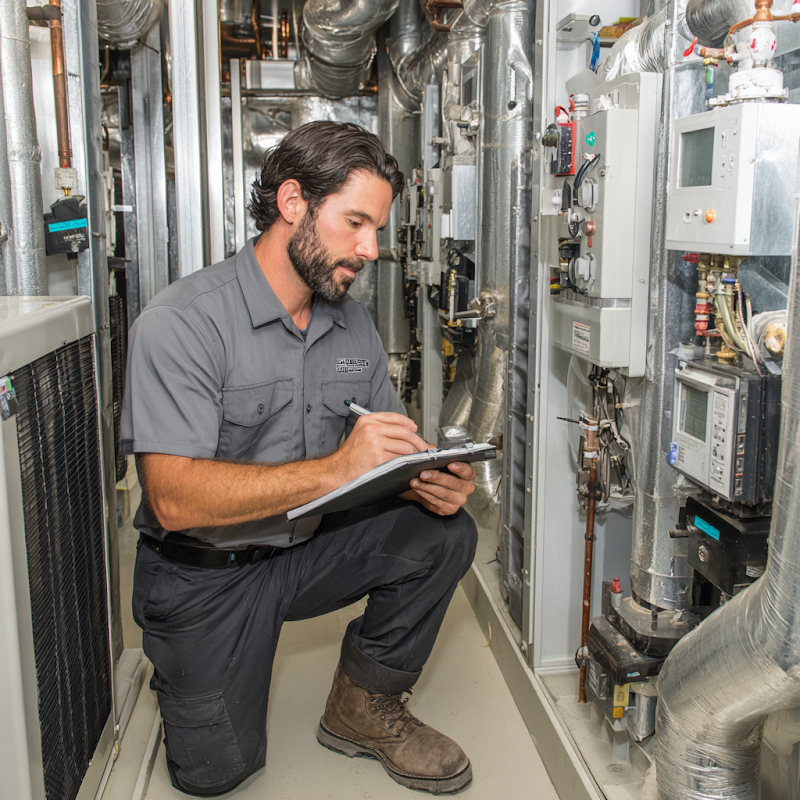
Our investigation team spent months interviewing industry insiders, analyzing contractor credentials, and examining installation failures that cost property owners thousands in premature repairs. What we discovered might change how you approach your next HVAC upgrade. HVAC system transformations demonstrate the dramatic difference quality installation makes in real-world applications, while commercial HVAC scaling insights reveal the technical expertise required for complex installations that most homeowners never consider.
The results of our investigation reveal a troubling pattern: many contractors bid low, cut corners during installation, and leave customers with systems that perform poorly and fail prematurely. Here’s what every property owner needs to know before signing on the dotted line.
The Credential Game: Separating Real Experts from Imposters
Like medical doctors displaying their diplomas, legitimate HVAC contractors should proudly showcase their credentials. But our investigation found that many consumers never bother to verify these qualifications, assuming that anyone with a truck and some tools must know what they’re doing. This assumption costs property owners millions in botched installations every year.
Legitimate contractors carry multiple licenses that vary by state and municipality, along with specialized certifications for handling refrigerants, electrical work, and gas connections. These aren’t participation trophies handed out at weekend seminars; they represent extensive training and ongoing education requirements that separate qualified technicians from weekend warriors.
Insurance coverage tells another crucial part of the story. Reputable contractors carry comprehensive liability coverage that protects both their workers and your property. We discovered that some fly-by-night operations either carry minimal coverage or let their policies lapse, leaving property owners vulnerable to massive financial exposure if accidents occur during installation.
The Equipment Quality Investigation
Not all HVAC equipment comes from the same assembly line, despite what some contractors might claim when pushing cheaper alternatives. Our analysis revealed significant differences in component quality, efficiency ratings, and expected lifespan between budget and premium systems. The savings from choosing bargain equipment often evaporate within the first few years of operation.
Energy efficiency ratings directly impact operating costs for the life of the system, making them crucial factors in the total cost of ownership. We examined utility bills from properties with similar square footage and found monthly cost differences of hundreds of dollars between efficiently installed premium systems and poorly installed budget units.
Warranty coverage varies dramatically between manufacturers and depends heavily on proper installation procedures. Our investigation found that many warranty claims get denied not because of equipment defects, but because improper installation voided the coverage. This leaves property owners paying for repairs that should have been covered under warranty.
Installation Process: Where the Magic Happens or Disasters Begin
The installation process reveals where qualified contractors separate themselves from the competition. Like a master chef following a precise recipe, experienced HVAC technicians follow detailed procedures that ensure optimal system performance and longevity. Cutting corners during installation creates problems that may not surface for months or years.
Load calculations determine the proper system size for your specific building, considering factors like square footage, insulation levels, window placement, and usage patterns. Our investigation found that many contractors skip these calculations entirely, simply installing whatever system fits their inventory or maximizes their profit margins.
Ductwork design and installation require both technical knowledge and craftsmanship that directly affect system efficiency and indoor air quality. Improperly sized or poorly sealed ducts can reduce system efficiency by 30% or more, while also creating noise issues and uneven temperatures throughout the building.
The Technology Integration Factor
Modern HVAC systems increasingly rely on sophisticated control systems that require specialized programming and calibration. These aren’t systems you can install like changing a light bulb; they require technicians who understand both mechanical systems and digital technology integration.
Smart thermostats and zoning controls offer tremendous benefits when properly configured, but they become expensive paperweights when installed incorrectly. Our investigation found that many contractors install these devices without proper training, leaving customers with systems that never achieve their full potential.
System commissioning represents the final step that many contractors either skip or perform inadequately. This process involves testing and fine-tuning all system components to ensure optimal performance. Properties with properly commissioned systems consistently outperform those where contractors simply connected the equipment and left.
Red Flags That Should Send You Running
Door-to-door solicitation tops our list of warning signs that should immediately put you on guard. Legitimate contractors build their businesses through referrals and established relationships, not by knocking on doors offering too-good-to-be-true deals on leftover equipment from another job.
Pressure tactics designed to force immediate decisions often indicate contractors who know their proposals won’t survive careful scrutiny. Quality contractors welcome questions, provide detailed written estimates, and give customers time to make informed decisions.
Cash-only payment requests or demands for full payment upfront should trigger immediate alarm bells. Established contractors have relationships with suppliers that allow them to purchase materials without requiring customer prepayment, and they accept standard payment methods.
The Quality Assurance Process
Reputable contractors implement quality control measures throughout the installation process, including inspections at critical stages and comprehensive testing before considering the job complete. These contractors understand that their reputation depends on customer satisfaction and system performance.
Follow-up service separates contractors who view installations as one-time transactions from those who build long-term customer relationships. The best contractors provide ongoing maintenance programs that keep systems operating efficiently while identifying potential issues before they become expensive problems.
Documentation provided at job completion should include equipment manuals, warranty information, maintenance schedules, and emergency contact information. This documentation proves that the installation was completed properly and provides the information you’ll need for future service and warranty claims.
Making Your Decision: A Strategic Approach
Treating HVAC installation like a major business decision rather than a routine purchase dramatically improves your chances of success. Obtain multiple detailed proposals that allow direct comparison of equipment specifications, installation procedures, and total project costs.
Reference checks from recent customers provide insights into contractor reliability, quality of work, and customer service that you can’t get from online reviews or sales presentations. Don’t hesitate to contact these references directly and ask specific questions about their experiences.
Timeline expectations should be realistic and clearly communicated. Rush jobs often result in shortcuts that compromise installation quality, while contractors who can’t provide reasonable scheduling estimates may lack the organizational skills necessary for complex installations.
The HVAC installation decision affects your property’s comfort, operating costs, and value for years to come. Our investigation shows that investing in quality contractors and equipment pays dividends through lower operating costs, fewer repairs, and longer system life. When the summer heat hits or winter cold sets in, you’ll appreciate the difference that quality installation makes.
About the Author: Mark is a tenured writer for NewsWatch, focusing on technology and emerging trends. Mark gives readers insight into how tomorrow’s innovations will transform our relationship with technology in everyday life.