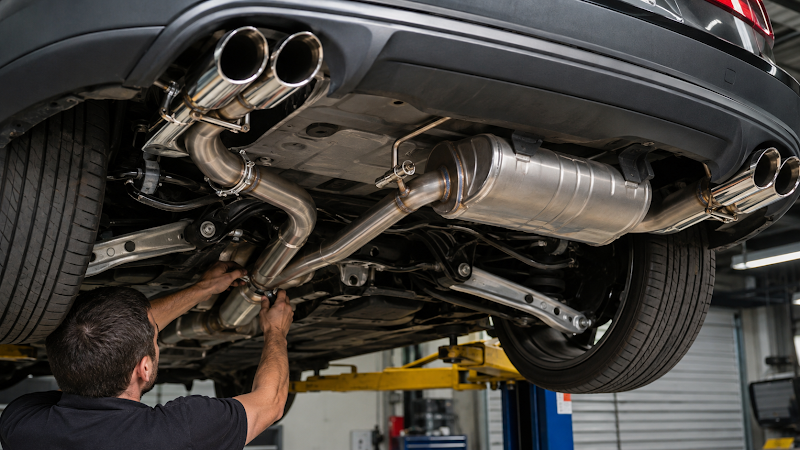
A cat-back exhaust is an aftermarket system that replaces the exhaust components located behind the catalytic converter. Depending on the vehicle and product design, it may include the mid-pipe, resonator, muffler, tailpipes, and exhaust tips.
Many drivers install a cat-back exhaust to create a deeper exhaust note, improve appearance, reduce weight, or support better exhaust flow. A stainless steel cat back exhaust can also provide better corrosion resistance than some factory systems. However, it does not guarantee a large horsepower increase. The result depends on the engine, factory exhaust design, pipe diameter, and other modifications.
This guide explains how a cat-back exhaust works, how it affects sound and performance, and what to check before choosing one.
What Parts Are Included in a Cat-Back Exhaust?
The exact starting point of a cat-back system varies by vehicle, but it generally connects to the exhaust after the last catalytic converter.
The mid-pipe carries exhaust gases toward the rear of the vehicle. Some systems include a resonator, which helps control specific sound frequencies, reduce rasp, and limit cabin drone.
The muffler controls overall volume and shapes the exhaust tone. Depending on its design, it may use chambers, perforated tubes, or sound-absorbing packing material.
The tailpipes direct exhaust gases toward the back of the vehicle, while the exhaust tips provide the visible finish. Tips can change appearance and may slightly affect the perceived tone, but they have little effect on engine performance by themselves.
Not every cat-back includes all these parts. Some vehicles have multiple catalytic converters, unusual flange locations, or integrated factory components, so the product description should define exactly what is included.
How Does a Cat-Back Exhaust Change Your Car?
A cat-back exhaust primarily changes sound, exhaust flow, appearance, and sometimes vehicle weight.
Exhaust Sound
Sound is usually the most noticeable difference. Compared with a factory system, a performance cat-back may produce a deeper or louder tone, especially during acceleration.
The final sound depends on the engine, pipe diameter, muffler design, resonator, and number of exhaust outlets. Removing the resonator may increase volume and rasp, but it can also make the exhaust less comfortable during everyday driving.
Exhaust Flow and Performance
Many cat-back systems use mandrel-bent tubing, smoother transitions, and a larger pipe diameter. These features can reduce unnecessary restriction behind the catalytic converter.
Performance gains are usually modest on an otherwise stock vehicle, particularly when the factory exhaust already flows efficiently. Turbocharged engines or modified engines moving more exhaust gas may benefit more from a properly sized system.
The goal is not simply to eliminate backpressure. Pipe diameter must preserve suitable exhaust velocity for the engine and intended RPM range. Installing oversized tubing on a stock engine may provide little benefit and can sometimes weaken low-speed response.
Cabin Drone and Daily Driving
Exhaust drone is a steady, low-frequency vibration or hum that enters the cabin at certain engine speeds. It is especially noticeable during highway cruising.
Resonators, muffler construction, pipe length, and vehicle insulation all affect drone. A resonated system may reduce it, but no design can guarantee a drone-free experience in every vehicle. Drivers who commute or take long trips should consider sound quality at cruising speed, not only volume under acceleration.
Cat-Back vs. Other Exhaust Upgrades
A cat-back is only one of several common exhaust modifications.
Cat-Back vs. Axle-Back
An axle-back system replaces the components behind the rear axle, usually the rear muffler, tailpipes, and tips. It is primarily intended to change sound and appearance.
A cat-back replaces more of the exhaust and may provide a greater improvement in flow. It normally costs more and takes longer to install, but it also gives the manufacturer more control over pipe diameter and sound tuning.
Cat-Back vs. Downpipe
On a turbocharged engine, the downpipe carries exhaust away from the turbocharger. It is located upstream of the cat-back and may contain or connect to a catalytic converter, depending on the vehicle.
A downpipe can have a greater effect on turbo response and power when the original part is restrictive. However, it may require tuning, and any change involving emissions equipment must be checked for legal compliance.
A cat-back usually leaves the downpipe, catalytic converters, and upstream sensors unchanged, making it a simpler modification.
Cat-Back vs. Full Exhaust
A full exhaust replaces a larger portion of the system, potentially beginning at the headers, exhaust manifold, or turbocharger. It can support higher-output builds but costs more and may require additional parts, tuning, or fabrication.
For drivers mainly seeking better sound and appearance, a cat-back is often the more practical starting point.
Does a Cat-Back Exhaust Need a Tune?
Most vehicle-specific cat-back systems do not require an ECU tune because they are installed downstream of the catalytic converters and primary oxygen sensors.
However, this is not a universal rule. Some vehicles use downstream valves, sensors, or unusual exhaust layouts. A tune may also help optimize a combination of modifications, although the cat-back alone usually produces only a small performance change.
Always follow the system manufacturer’s instructions and confirm whether the vehicle has active exhaust valves or other electronic components that must remain connected.
How to Choose the Right Cat-Back Exhaust
Start by confirming the vehicle’s year, make, model, engine, drivetrain, wheelbase, body style, and trim. These details can affect flange locations, pipe routing, hangers, and bumper clearance.
Next, choose the sound level you can comfortably live with. A mild system may stay close to factory volume while producing a deeper tone during acceleration. More aggressive systems increase volume across a wider RPM range and may introduce additional drone or rasp.
Compare resonated and non-resonated options carefully. Resonated systems generally produce a smoother, more controlled sound. Non-resonated systems are often louder but may sound harsher on some engines.
Material also affects price and durability. A stainless steel cat back exhaust made from T304 stainless steel offers strong corrosion resistance, while T409 stainless steel is generally more affordable but may develop surface discoloration. Aluminized steel costs less but is more vulnerable to corrosion in wet or salted-road conditions. Titanium reduces weight but is considerably more expensive.
Finally, select a pipe diameter suited to the engine. Larger is not automatically better. A stock four-cylinder, a naturally aspirated V8, and a modified turbocharged engine have different flow requirements.
Is a Cat-Back Exhaust Street Legal?
Because a conventional cat-back is installed after the catalytic converter, it generally does not remove the vehicle’s primary emissions controls. However, that does not automatically make every system legal in every location.
State and local rules may regulate exhaust volume, mufflers, visible modifications, and noise levels. A system may retain the catalytic converter but still violate local noise requirements. Check the product’s application notes and the regulations where the vehicle is registered.
Is a Cat-Back Exhaust Worth It?
A cat-back exhaust can be worthwhile for drivers who want a more distinctive sound, improved appearance, or better flow for future modifications. A well-made stainless steel cat back exhaust may also last longer in areas exposed to rain, road salt, and winter conditions. Drivers comparing exhaust upgrades for different vehicle applications can explore the performance parts available from XKV Racing.
It is less suitable for drivers expecting a dramatic horsepower increase from an otherwise stock vehicle. The total value depends on sound preference, build quality, fitment, installation cost, and daily driving comfort.
Final Thoughts
A cat-back exhaust replaces the exhaust components behind the catalytic converter and primarily changes sound, appearance, and downstream flow. It may provide modest performance benefits, but results vary by vehicle and engine configuration.
Choose a system based on verified fitment, suitable pipe diameter, material quality, sound level, and local regulations. A properly matched cat-back can improve the driving experience without requiring the complexity of a complete exhaust replacement.