


Key Takeaways
- Regular testing and cleaning of your sump pump can prevent unexpected failures.
- Inspecting discharge lines and power supplies ensures the system functions properly.
- Professional inspections can identify issues before they become major problems.
Table of Contents
- Test Your Sump Pump Regularly
- Clean the Sump Pit and Pump Components
- Inspect the Discharge Line
- Check Power Supply and Backup Battery
- Schedule Annual Professional Inspections
Maintaining a sump pump is an essential task for any homeowner concerned with preventing basement flooding and costly water damage. Even if your sump pump appears to be working flawlessly, regular upkeep is the key to long-term protection. Proper care not only extends the unit’s lifespan but also ensures it operates efficiently during a heavy storm or a sudden flood. For homeowners needing assistance or guidance, sump pump repair Kansas City are available to help keep your equipment in peak condition.
Being proactive with sump pump maintenance means you can avoid unexpected breakdowns and the stress of flooded basements. Regularly inspecting your system and addressing small issues before they escalate can save hundreds or even thousands of dollars in repair bills. With the right routine, you can keep your sump pump ready for action and your home safe from moisture intrusion.
Your sump pump’s reliability depends on several key factors, including the condition of the discharge line, the power supply, and the overall cleanliness of the system. Overlooking any of these areas may result in a critical failure at the worst possible time. That is why comprehensive maintenance should be an essential part of your home care checklist.
If you are new to sump pump care or want to make sure you are covering every essential step, understanding exactly what needs attention is crucial. This guide will walk you through practical, step-by-step maintenance tips to keep your sump pump working efficiently year-round. For more information on general sump pump systems and best practices, the Family Handyman’s sump pump buying guide offers helpful insights.
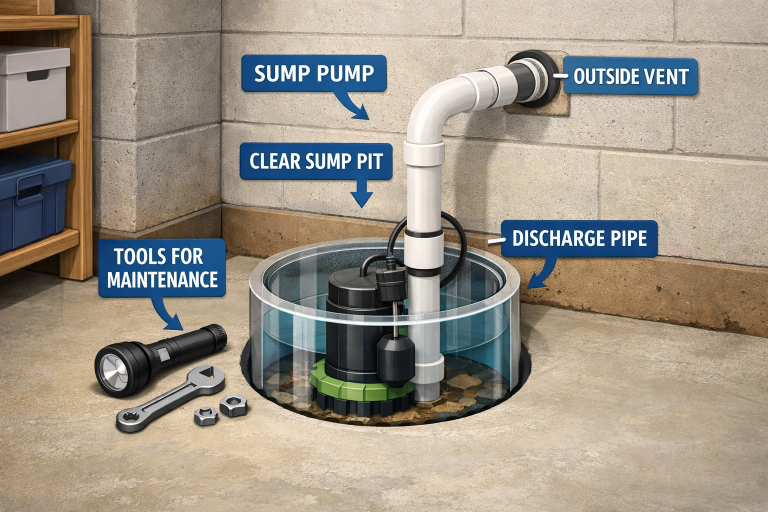
Test Your Sump Pump Regularly
Testing your sump pump on a schedule ensures that you will not be caught unprepared during a severe thunderstorm or unexpected flooding. The simplest way to check its function is by pouring a bucket of water into the sump pit. Watch to see the float rise, the pump start promptly, and all the water discharged before the unit shuts off. If your pump fails this test, it may require immediate cleaning or a professional assessment.
Manufacturers and experts generally recommend testing your sump pump every few months and before any anticipated heavy rainfall. Keeping a regular testing schedule guards against undetected malfunctions and gives you time to correct issues at your convenience rather than in an emergency.
Clean the Sump Pit and Pump Components
Over time, debris such as dirt, gravel, and silt can accumulate in the sump pit, leading to blockages. To clean the system, always start by unplugging the unit from its power source to ensure safety. Gently remove the pump, clear any visible debris from the pit, and rinse the pump itself if needed. While you have it out, check the intake screen and impeller for obstructions that could hinder performance. A clean pump and pit allow the system to work at maximum efficiency and minimize unnecessary wear and tear on components.
For detailed cleaning instructions and additional maintenance tips, consult This Old House’s sump pump maintenance guide, which provides illustrations and troubleshooting suggestions for most sump pump models.
Inspect the Discharge Line
The discharge line plays a vital role in moving water away from your foundation. At a minimum, you should ensure the pipe leads water at least 10 feet from your home, though further is better when possible. Regularly check the line for any clogs, bends, cracks, or frozen sections, particularly in the colder months when ice can block flow and cause backups.
Make sure there are no obstructions at the end of the discharge pipe outside, such as mulch, snow, or other debris. Keeping this line clear significantly reduces the risk of water seeping back into your basement and undermining the purpose of the sump pump.
Check Power Supply and Backup Battery
One of the most common reasons for sump pump failure during a storm is an unexpected power outage. Make sure the unit is plugged into a dedicated, grounded GFCI outlet, and periodically inspect the power cord for signs of damage. If your system includes a battery backup, test it a few times a year and replace the battery according to the manufacturer’s recommendations, usually every 2 or 3 years.
The peace of mind that comes with knowing your sump pump will work even during a blackout is well worth this small investment of time and resources. Battery backups are especially important for homes in areas prone to severe weather.
Schedule Annual Professional Inspections
Even with diligent homeowner maintenance, some issues require the trained eye of a professional. Annual checkups by a licensed technician should include a thorough inspection of the pump’s motor, float switch, wiring, and discharge components. Professionals can spot early warning signs such as corrosion, wiring problems, and worn-out seals, and fix them on the spot or advise on a timely replacement.
Routine inspections help catch small problems before they become emergencies, providing added assurance that your system will work reliably when needed. This small annual investment can provide peace of mind and prolong the useful life of your sump pump.
Consistent sump pump maintenance is your best defense against water damage and the associated expenses. By following the above tips, you keep your pump in optimal condition and keep your home dry, no matter how fierce the weather outside.